Engineered chip and potato seasoning flavors with Lezaroma to create a consistent taste that suits modern markets
The potato chip industry has evolved in recent years from a simple activity focused on producing and packaging chips to a comprehensive industry based on studying consumer behavior, flavor engineering, and building a unique sensory identity for each product. Competition is no longer solely about crunch or packaging; chip flavors, seasonings, and potato flavors have become central elements that determine a product's ability to attract and retain customers. A customer might buy a product for the first time because of the packaging design or price, but they will only repurchase it if they find a distinct, balanced, and different flavor compared to other products on the market.
Flavor engineering begins with understanding the moment a consumer opens the package. At this moment, the first aroma is released, creating a quick impression of the product before tasting it. If the aroma aligns with the flavor name on the package, the consumer perceives the product as authentic and clear. However, if the aroma is weak or deviates from the description, the initial experience may start with a negative impression. Therefore, professional chip flavors don't just focus on taste; they are designed to create a balanced relationship between the initial aroma, the taste during chewing, and the lingering sensation after tasting.
Lezaroma approaches flavor development as a holistic process that begins with studying the base product. Potatoes are not a single, uniform ingredient in every factory; they vary depending on the variety, starch content, chip thickness, cutting method, frying temperature, and type of oil used. A particular blend might produce excellent results on thin chips but be less effective on thicker chips. Similarly, a flavor that works well on French fries might need adjustment before being used on baked goods or corn crackers. Therefore, Lezaroma focuses on tailoring flavors to the specific characteristics of each product rather than offering a one-size-fits-all approach.
The seasonings in chips play a crucial role in establishing the basic flavor profile. A blend might contain elements that impart saltiness, acidity, heat, a creamy texture, or a smoky character, but the true value lies not in the number of ingredients but in how they interact. Adding just one ingredient can completely alter the flavor profile. A small amount of an acidic ingredient can enhance the flavor and give it a more vibrant feel. Conversely, an excessive amount can result in a harsh taste that overpowers the other elements. Therefore, successful chip seasonings require a delicate balance that allows the consumer to experience a powerful flavor without becoming tiresome over time.
The seasoning gives the mix its aromatic character and helps to link it to a clear concept in the consumer's mind. If the flavor is inspired by barbecue, the product should have a smoky, spicy sensation that matches this description. If it's inspired by a cheesy dish, it should combine fullness, saltiness, and a creamy texture. Spicy flavors don't just need to be strong; the heat must be tailored to the target market, as some consumers prefer a quick, pronounced heat, while others prefer a gradual build-up that lasts longer.
Lezaroma places great importance on the concept of the taste journey—the way the flavor unfolds from the first bite to the last. Some flavors may start with a strong aroma and then fade quickly, while others emerge later after chewing. A successful product needs a balanced sequence that begins with an appealing aromatic cue, followed by a clear base taste, and then a final sensation that encourages the consumer to eat another chip. This journey doesn't happen by chance; it results from a careful selection of ingredients, their proportions, their solubility, and their interaction with oil and saliva.
The nature of the chip powder affects the success of the seasoning process within the factory. Particle size, powder flow, and density are factors that determine the uniformity of their distribution throughout the product. If some particles are too large and others too fine, the mixture components may separate during storage or within the seasoning machine. This can lead to variations in taste between the beginning and end of the process. Therefore, chip flavor powder must be homogeneous and able to pass through the dosing systems stably.
Adhesion is also one of the most important criteria for evaluating potato flavors. The factory doesn't want the flavor to remain at the bottom of the package; it needs to adhere to the surface of the chips. Adhesion is affected by the oil content, product temperature, the movement of the seasoning drum, and the line speed. The product may require adjusting the powder addition method or changing the dosage to achieve the best possible distribution. Therefore, collaboration between the flavor supplier and the production team helps improve the result and minimize waste.
Lizaroma supports manufacturers in selecting the appropriate dosage based on the product type and desired flavor intensity. A higher dosage isn't always the best solution, as increased dosage can lead to an unbalanced taste or higher costs without a real improvement in the consumer experience. A highly concentrated blend can achieve better results using a smaller quantity if properly formulated. Therefore, flavor should be evaluated based on the final application cost per unit of product, not just the price of the powder.
Taste consistency between production batches is a significant challenge in the potato chip industry. Consumers accustomed to a specific flavor expect it every time. If they find the new batch saltier, less pungent, or with a different aroma, they may perceive the product's quality as inconsistent. This is why consistent chip flavors are essential for building trust and brand loyalty.
Consistency depends on the quality of raw materials, manufacturing precision, storage methods, and the regularity of factory operations. Flavor can be affected by changes in the type of oil, moisture content, or potato temperature during seasoning. Therefore, flavor must be considered within the overall production system, as the quality of the mix alone is insufficient if the application conditions are not stable. Practical testing can identify sources of variation and address them.
Custom potato flavors help give the product a unique character that is not easily imitated. This can begin with...A brand might have a well-known flavor like cheese, pepper, or barbecue, then add specific details to make it unique. The cheese flavor might be creamier, have a smoky edge, or be herbal. The pepper flavor might combine heat and acidity or spice with a smoky, grilled character. These subtle differences create a sensory signature that consumers recognize over time.
Lezaroma develops these signatures by understanding the vision of the manufacturer and the target market. The flavor can be modified based on taste feedback, producing several samples with varying degrees of saltiness, heat, or acidity. These samples are then tested on the actual product, as tasting the powder alone doesn't accurately reflect its performance after contact with oil and potatoes.
Different markets require different levels of flavor intensity. In some markets, consumers prefer intense flavors that are immediately apparent, while others prefer a more subtle taste. Preferences can also vary according to age, lifestyle, and the occasion. A snack aimed at children might require a mild, familiar flavor, while a product aimed at young adults can offer bolder combinations.
Flexibility in developing seasonings for manufactured chips helps them enter new markets. Instead of changing the entire product, the mix can be modified to suit local tastes. This might involve reducing saltiness, increasing acidity, adjusting the heat level, or altering the aroma. This capability gives the brand a greater chance of export success, as consumers in each market feel the product is close to their preferences.
The flavors of the chips also influence packaging design and marketing messaging. Spicy flavors may require a strong visual identity, while creamy flavors suit softer designs. However, the design should not make exaggerated promises but rather reflect the actual experience. If a product is described as extremely spicy when it offers a mild taste, the customer will perceive a mismatch. Conversely, if the packaging appears understated while the flavor is overpowering, the result will be the same.
Lizaroma can develop flavors that suit different marketing concepts, such as classic, global, seasonal, or limited-edition flavors. This diversity allows manufacturers to refresh their product lines and maintain consumer interest. Seasonal flavors help generate market interest, while core flavors maintain stable sales volumes.
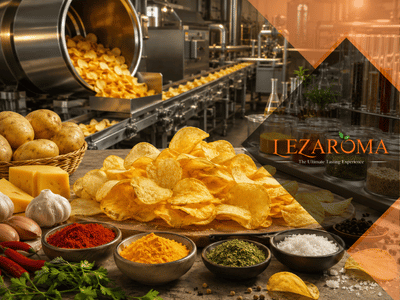
Potato seasonings have numerous applications beyond traditional potato chips. They can be used in wavy potatoes, potato fingers, baked goods, stuffed snacks, cornflakes, and cereal crackers. However, each application requires specific adjustments, as the product's shape, surface area, and oil content affect the intensity of the flavor.
In wavy products, for example, the chip powder tends to accumulate in grooves, potentially resulting in a more intense flavor in certain areas. Spherical or hollow products may require a different seasoning method to ensure the powder reaches all surfaces. Industrial testing helps determine the drum speed, mixing time, and flavoring quantity that achieve optimal homogeneity.
It's also important to consider the impact of storage on flavor. The product may be exposed to varying temperatures during transport and distribution, and humidity can affect the crispness and flowability of the powder. Furthermore, some aromatic components can change over time. Therefore, potato chip flavors should be tested at various points in their shelf life to ensure consistent taste and aroma.
Packaging plays a crucial role in protecting potato flavors. It must prevent air and moisture from entering and protect the oils from oxidation, as oil changes directly affect flavor. The air space inside the package, the sealing method, and the quality of the packaging materials all contribute to the final product experience. Thus, flavor development is inseparable from all other manufacturing elements.
High sensory quality enhances the product's commercial value. When consumers find the powder evenly distributed, the aroma appealing, and the taste consistent, they associate this experience with the brand's quality. This association can be stronger than advertising messages, as consumers trust their personal experience. Therefore, investing in professional potato chip seasonings is an investment in the product's long-term reputation.
Lezaroma supports manufacturers seeking to improve their products with solutions encompassing potato chip flavors, seasonings, spices, potato flavors, crisp mixes, and snack powders. The goal is not simply to provide an acceptable taste, but to achieve a flavor that is repeatable, scalable, and commercially viable.
Flavor development can be used by manufacturers as a tool to test new market opportunities. A limited quantity of a product with a new flavor can be introduced, and consumer reaction, sales, and repurchase rates can be measured. If the trial is successful, production is expanded. This approach reduces the risk of investing in new products and provides the company with real data on its customers' preferences.
Structured sensory testing helps in making better decisions. Several samples can be presented to a group of consumers, who can then evaluate the aroma intensity, balance, saltiness, heat, and overall impression. The product can also be compared to competitors to identify strengths and weaknesses. By analyzing the results, development teams can refine the formula more precisely.
Innovation in chip flavors has become essential for maintaining brand presence. Consumers expect new products, but at the same time, they want to maintain the flavors they know. Therefore, manufacturers need a balance between continuity and innovation. Core products can be maintained while launching limited or seasonal flavors that test new trends.
The Lezaroma name can be present on this journey as a flavor development partner, not just a traditional supplier. Flezaroma works to understand the product's business objective, the nature of the production line, and market preferences, then transforms
#Lezaroma #ليزاروما #نكهات_الشيبس #نكهات_الشيبسي #توابل_الشيبس #بهارات_الشيبس #بودرة_الشيبس #خلطات_الشيبس #نكهات_البطاطس #توابل_البطاطس #بهارات_البطاطس #بودرة_البطاطس #نكهات_المقرمشات #توابل_المقرمشات #بهارات_المقرمشات #نكهات_السناك #بهارات_السناك #توابل_السناك #نكهات_الذرة #بودرة_النكهات #نكهات_غذائية #نكهات_صناعية #نكهات_تصنيعية #نكهات_جاهزة #نكهات_مخصصة #نكهات_عالية_التركيز #نكهات_ثابتة #نكهات_عالية_الجودة #نكهات_للمصانع #نكهات_لخطوط_الإنتاج #مصانع_الشيبس #مصانع_البطاطس #مصانع_المقرمشات #صناعة_الشيبس #صناعة_السناك #صناعة_الأغذية #FoodFlavors #ChipsFlavors #PotatoFlavors #PotatoSeasoning #ChipsSeasoning #SnackFlavors #SnackSeasoning #IndustrialFlavors #FoodSeasoning #FlavorSolutions #FlavorDevelopment #LezaromaFlavors

Popular Articles