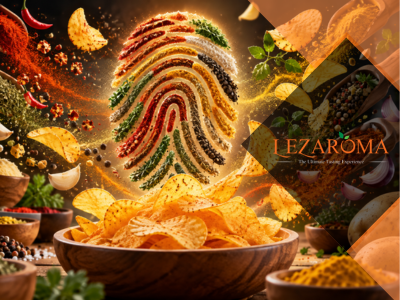
How do Lezaroma’s potato chip flavors and seasonings help build a taste identity that is difficult to replicate
In the modern snack and chip industry, differentiation is no longer defined solely by packaging, the quality of the crunch, or the price point. Instead, it hinges on a brand’s ability to deliver a flavor with a distinct "personality"—one that consumers can easily recognize. Consequently, seasonings, spices, and flavor profiles for chips have become vital tools for building brand identity; they provide a sensory signature that sets a product apart from the dozens of similar items lining store shelves. This signature can be the very reason a consumer chooses one specific brand over the many other alternatives available in the same category.
When a flavor is generic—or too similar to those of competitors—it becomes difficult for consumers to recall. A product might be technically well-made, yet fail to leave a lasting impression. Conversely, when a flavor possesses a defined character—such as a signature creamy cheese note, a nuanced level of heat, a refreshing tang, or a balanced smoky quality—the product begins to forge its own unique identity. In this context, flavor transcends being a mere ingredient; it becomes a defining element of the brand itself.
Lezaroma approaches flavor development from this perspective, viewing the product as a holistic experience that must be clear, consistent, and distinctive. Therefore, seasonings are not developed based on a name alone, but rather on the specific "personality" that the brand intends to convey. The objective might be to create a bold product for a younger demographic, a balanced option for families, or a premium, luxurious offering. Each direction requires a distinct approach to balancing elements such as aroma, saltiness, heat, acidity, and the lingering aftertaste.
Defining a product’s identity begins with establishing its core tone. If a brand aims to be known for robust flavors, its blends must be distinct without being overpowering. If the goal is smoothness and balance, the flavor profile should be pleasant and consistent. Alternatively, if innovation is the priority, unconventional elements can be integrated with familiar tastes, offering consumers a novel yet accessible experience.
Take cheese flavors, for example: a generic label on the packaging is insufficient. The specific character must be defined—should it be creamy and mild, sharp, smoky, or perhaps infused with chili? Lezaroma can develop multiple variations of the same flavor, each with a unique personality, enabling manufacturers to create products that stand out from what is already on the market.
The same principle applies to spicy potato snacks. Heat can be immediate and sharp, gradual, or lingering long after the last bite. Furthermore, heat can be paired with acidity, smokiness, cheese notes, or herbs. Each combination shapes a distinct product identity, which in turn influences the specific consumer segment it will attract.
Lezaroma helps brands define these nuances before production begins; such clarity during the development phase significantly reduces the need for subsequent adjustments. When a sensory profile is clearly defined, it becomes easier to develop and compare samples, ultimately facilitating the final decision-making process. Conversely, when a concept remains too broad, it may result in several high-quality prototypes that nonetheless lack a distinct, cohesive identity.
For potato chip seasonings, industrial viability is essential; a unique flavor holds little value if it cannot be consistently replicated in a manufacturing environment. Consequently, the seasoning blend must be homogeneous, free-flowing, capable of precise dosing, and able to adhere effectively to the product’s surface. These operational requirements ensure that the sensory signature developed during the testing phase is accurately reflected in every production batch.
The nature of the product significantly influences this sensory signature. Thin chips, for instance, require a delicate flavor profile, as even a slight excess in dosage can render the taste overpowering. In contrast, thicker or ridged chips require a different distribution approach to ensure the flavor is clearly perceptible across the entire product. Furthermore, corn-based snacks and baked snacks differ from potato-based products in their capacity to retain seasonings; therefore, the blend must be tailored to the specific base material.
At Lezaroma, we account for these variations when developing seasonings for potato chips and savory snacks, ensuring that the core identity remains consistent regardless of the product’s form. While a blend may require adjustments—such as modifications to dosage, particle size, or aroma intensity—the overall character must remain distinct and recognizable.
Seasoning powders play a critical role in delivering flavor uniformly across the product’s surface. If a powder lacks stability—tending to clump or suffer from ingredient separation—it will inevitably lead to taste inconsistencies from one production batch to the next. This compromises the sensory identity, as the consumer does not receive the same experience every time.
This highlights the importance of flowability and particle size. The powder must be compatible with dosing systems, move easily through equipment, and ensure that aromatic components and spices are distributed uniformly. The more consistent this distribution, the better a brand can maintain its signature profile.
Adhesion also affects flavor clarity. If a large amount of seasoning falls to the bottom of the package, some chips end up bland, while the consumer is left with an excess of powder at the bottom of the bag. This creates an inconsistent experience and weakens the product's image.
Lezaroma assists in developing blends tailored to the product’s oil content, temperature, and seasoning method—all of which influence adhesion. It may be necessary to adjust the point at which the powder is applied, or the dosage itself, to ensure the seasoning adheres more effectively to the product.
Temperature also impacts aroma. Certain aromatic compounds are heat-sensitive and may volatilize if the powder is applied while the product is too hot. Conversely, if the seasoning is added after the product has cooled significantly, adhesion may be reduced. Therefore, the timing of the seasoning process must be carefully determined to strike a balance between aroma retention and proper powder adhesion.
Aroma is a vital component of a product’s identity, as consumers smell a product before tasting it. Within seconds, an aroma can shape either a positive or a negative expectation. For instance, if a package features a cheese flavor... If the aroma is too faint, consumers may perceive the product as being of lower quality. Conversely, if a spicy flavor carries an overpowering or unpleasant scent, they might be discouraged from trying it. Therefore, the aroma must be distinct, well-balanced, and aligned with the product’s name.
Lezaroma works to ensure this harmony between aroma, taste, and design. A successful sensory identity must align with the product’s visual identity; if a product’s appearance suggests a bold, intense character, the flavor should be sufficiently pronounced. Similarly, if the design conveys a smooth, creamy quality, the taste should reflect that.
This alignment fosters consumer trust, as the product delivers on the promise presented on its packaging. The clearer this promise—and the more closely it matches the actual experience—the more likely a customer is to remember the brand and return for more.
Customized snack flavors help reduce reliance on price-based competition. When a product is too similar to alternatives, price becomes the deciding factor. However, when a product offers a unique taste that cannot be easily found elsewhere, price differences become less significant, as the consumer becomes attached to the experience itself.
In this context, flavor becomes a genuine commercial asset. A bespoke blend can add significant value to a brand—provided it is maintained with consistency. Over time, a product may become defined more by its taste than by any other element of the brand.
Lezaroma assists manufacturers in developing these blends through a process of testing and refinement. Multiple iterations of a single flavor can be created and evaluated on the actual product, rather than being assessed solely as a seasoning powder. Subsequently, the version that strikes the best balance between distinctiveness and consumer appeal is selected.
A flavor does not need to be highly unconventional to be distinctive. Often, the best approach is to develop a familiar taste in a unique way. For instance, a well-known type of cheese might be presented with a distinct, creamier twist, or a familiar pepper flavor could be enhanced with a novel touch of acidity or smokiness.
This strategy helps attract consumers without intimidating them; the flavor is familiar enough to provide a sense of comfort, yet sufficiently different to feel like a new product. Achieving this balance is a key factor for the long-term success and market penetration of any product.
Lezaroma can also develop flavors inspired by local foods or recipes, helping a brand forge a stronger connection with its market. Familiar elements from local cuisine can be transformed into a clear, recognizable seasoning blend for chips—though care must be taken to avoid an overly complex mix by focusing instead on the most defining characteristics of the original recipe.
Such flavors can establish a strong identity for a product within its local market and also serve as an appealing feature for exports; international consumers may be drawn to a novel taste that offers something distinct from their usual options.
Lezaroma helps streamline these concepts, translating them into practical, commercially viable flavors. This process involves identifying key sensory components and fine-tuning them to suit the specific nature of the snack, ensuring the flavor remains clear and enjoyable to consume.
The required intensity of a flavor varies depending on the package size. A smaller package, for example, may benefit from a more concentrated flavor, given that the consumer will be consuming a limited portion. For larger packaging, a flavor profile that is pleasant and avoids causing quick palate fatigue is essential. This means that building a brand identity is not just about the formulation itself, but also about the dosage.
Lezaroma can adjust the dosage or concentration to ensure that a brand maintains its distinct character across all package sizes—a crucial consideration for brands that offer both single-serve and family-sized products.
Target demographics also influence flavor development. Products aimed at children require simple, clear flavor profiles, whereas younger consumers may appreciate bolder, more complex tastes. Products intended for families need to have broader appeal; consequently, a diverse range of flavors can be developed under a single brand identity.
Lezaroma assists manufacturers in creating this variety while maintaining cohesion across the product line. Although the flavors may differ, they share a consistent level of quality, balance, or aromatic profile, allowing consumers to recognize that they all belong to the same brand.
Furthermore, brands should evaluate flavor performance following a product launch. Issues that were not apparent during initial testing—such as excessive saltiness, a weak aroma, or uneven distribution—may emerge. Such feedback is vital for product improvement.
Lezaroma helps analyze this feedback to determine whether an issue stems from the flavor blend itself, the application process, storage conditions, or packaging. For instance, a weak taste might be due to an insufficient dosage, while a diminished aroma could be the result of storage conditions rather than the flavor formulation.
Any adjustments must be made with caution, especially if the product has already begun to build a customer base; a significant change in flavor could lead to the loss of existing consumers. Therefore, incremental improvements are often safer—such as adjusting the level of seasoning adherence, enhancing the aroma, or moderating a specific ingredient—without altering the product’s core character.
Shelf life affects the consistency of a product’s identity. If a product changes over time, the consumer will not have the same experience. Factors like oxygen and moisture can compromise the aroma, crunch, or oil quality; consequently, the product must be tested throughout its various stages of storage.
Packaging plays a vital role in protecting the flavors of potato snacks. It must prevent the ingress of air and moisture while preserving the product’s crunch. Furthermore, the packaging must be suitable for the rigors of transport and distribution—a particularly critical consideration if the product is intended for export.
Lezaroma understands that a great flavor requires the right environment to remain intact. The success of a product depends on the seamless integration of the seasoning blend, packaging, and storage; the sensory identity cannot be preserved if any one of these elements is weak.
Brands can also leverage flavor to build more compelling marketing campaigns. When a product possesses a distinct character, it becomes easier to craft a targeted message around it. A spicy flavor can be framed around the concept of boldness, a smoky flavor can evoke a barbecue atmosphere, and a creamy flavor can highlight qualities of richness and smoothness.
However, such messaging must always be rooted in the actual consumer experience.
Popular Articles