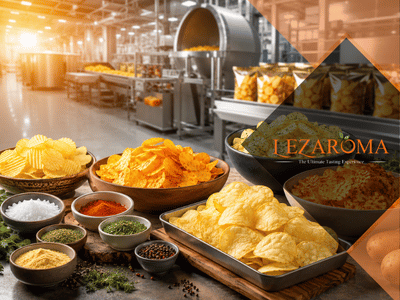
Lezaroma's chip flavors and potato seasonings contribute to more consistent, higher-quality, and more spreadable products
The chips and crisps industry is changing rapidly because consumers are no longer satisfied with a product that simply functions as a snack. They now seek a distinct taste, an appealing aroma, a balanced texture, and an easily memorable experience. In this context, chips, seasonings, and potato flavors have become essential elements in product development, as they give the product its identity, distinguishing it from the dozens of alternatives on the market. Even if the potato quality is excellent and the packaging is professional, a product will not achieve long-term success without a consistent and compelling taste that connects consumers to the brand.
Product strength begins with understanding the purpose of the flavor before selecting its ingredients. There is a difference between a flavor aimed at reaching the widest possible consumer base, one targeting a segment that enjoys spicy flavors, one designed to project a more luxurious image, and one that is experimental and launched for a limited time. Each objective requires a different sensory approach in terms of saltiness, heat, acidity, aroma, and flavor lingering. Therefore, developing potato flavors should not begin with simply asking about the flavor name, but with a deeper question concerning the product's role within the market.
Lezaroma focuses on linking flavor development to the nature of the product, consumer behavior, and production line. Lezaroma understands that the success of a blend isn't measured by its strength in the lab, but by its ability to deliver the same results when used on a large industrial scale. Some flavors sound excellent when tasting a sample, but become weak or inconsistent upon application due to variations in oil, heat, or seasoning speed. Therefore, potato chip seasonings must be designed with both sensory and operational considerations in mind.
The surface texture of the product plays a crucial role in determining how flavor manifests. Smooth chips don't retain powder in the same way as wavy products, and hollow or corn-based snacks differ from traditional potato chips. Some products have a large surface area relative to their weight, resulting in a rapid onset of flavor and requiring precise dosing. Thicker products require a more onset-promoting formula to prevent the base flavor from overpowering the seasoning.
The oil content affects the stability of potato seasonings, as oil helps the powder adhere, but it can also alter how some flavors are perceived. If the oil content is too low, the powder may settle at the bottom of the container instead of remaining on the product. If it's too high, the consumer may perceive a heaviness or greasyness that disrupts the balance. Therefore, the manufacturer needs to precisely adjust the amount of oil and the timing of flavoring addition.
Lezaroma helps manufacturers understand the relationship between powder, oil, and heat. The product coming out of frying is hot, and while this heat can promote adhesion, it can also cause some delicate aromatic compounds to evaporate. If the seasoning process is delayed until the product cools, the powder's stability may decrease. Therefore, the optimal point for adding the chips seasoning must be determined based on the mix composition, product type, and production line speed.
The smooth flow of the chips powder is one of the most important factors affecting production efficiency. Powder that clumps or sticks inside the dosing machines can cause inconsistencies in the amount added, leading to taste variations between containers. Furthermore, separation of components due to differences in particle size or density can result in a different production run at the beginning than at the end. Therefore, the mix must be physically homogeneous, not just taste-wise.
Particle size is a crucial factor in distribution. Very fine particles may float or stick to specific areas, while larger particles may fall easily and not settle on the surface. A good mix achieves a balance that allows for even coating of the product, maintaining an attractive appearance and minimizing wasted powder.
The success of chip flavors depends not only on their intensity but also on how they develop during eating. Some flavors make a strong impression on the first bite and then quickly fade, while others start weakly and develop over time. A balanced flavor begins with an eye-catching aroma, followed quickly by the main flavor, then secondary elements such as acidity, heat, or smoke develop, leaving a light, satisfying aftertaste that encourages another bite.
Lizaroma helps create this sequence by designing its mix in sensory stages. It might start cheesy or herbal, then develop a creamy character in the middle, and finally, pepper or smoke emerges. Or, the flavor might begin with a mild, appetizing acidity that then transforms into a balanced spicy flavor. The more harmonious these stages are, the greater the product's ability to create a sensory memory for the consumer.
Cheese flavors require different processing depending on the target audience. A product intended for children might need a smooth, familiar taste, while one aimed at young adults could offer a stronger cheese with pepper or smoke. Premium products might rely on deeper layers that create a feeling of richness and fullness. This diversity allows the manufacturer to offer several cheese products without them having the same appearance.
Spicy flavors, on the other hand, require determining the level of heat and how it manifests. There is immediate, rapid heat, gradual heat, and heat that lingers after tasting. Some markets prefer a very intense taste, while others prefer a moderate heat that allows for larger portions. This is why Lezaroma adjusts the flavors of peppers and spices according to market preferences, rather than using a single level for all its products.
Acidity plays an important role in bringing out potato flavors, as it invigorates the taste and helps to highlight other elements. It can be used in lemon and vinegar blends, hot sauces, and some flavors inspired by international cuisines. However, high acidity can cause sensory fatigue, so it should be adjusted according to the package size and the intended use.
As for the smoky flavor, it requires a delicate balance, as too much can make the product heavy or overpower the spices. It can be combined with tomatoes, sweets, peppers, or other ingredients. A herbalist creates barbecue-inspired flavors. These formulations allow the manufacturer to offer familiar products with a distinct signature.
Custom flavors help protect a brand from direct competition. If all companies use similar generic blends, product differentiation becomes minimal, and competition boils down to price and packaging. When a brand has its own unique blend, it builds a distinctive element that is difficult to replicate, and this flavor can eventually become a key factor in customer loyalty.
Lizzaroma offers the ability to develop multiple versions of a single flavor. A stronger and a milder version can be created, or the acidity, saltiness, and heat levels can be varied. These samples are then tested on the actual product. Through this comparison, the manufacturer can select the version that achieves the best balance between market acceptance and brand identity.
Sensory testing is a crucial step in the development process. It's not enough for the manufacturer's team to simply decide a flavor is good, as employees may be accustomed to the product or perceive it differently than consumers. Therefore, it's best to involve a representative group of the target audience and gauge their evaluation of aroma, taste, balance, longevity, and repurchase intent.
Testing shouldn't be limited to the first bite, as some chip seasonings seem appealing initially but become unpleasantly salty or spicy after a few bites. Therefore, the product should be evaluated within a portion size close to actual consumption. If the package is large, ensure the flavor provides a satisfying taste and doesn't cause rapid sensory overload.
Package sizes influence flavor design. Smaller packages may accommodate a more concentrated flavor because consumers finish them quickly, while family-sized packages require a more balanced flavor profile. Lezaroma can develop different dosages or versions to suit each size while maintaining the overall product identity.
The needs of sales channels also vary. Products sold in schools or kiosks require a clear, immediate flavor, while those sold in specialty stores may require more complex flavors. Export products need longer shelf life and the ability to withstand transportation and storage conditions.
Lezaroma helps manufacturers develop flavors suitable for expansion into different markets. A formula that is successful locally may need to be modified before entering another country due to differing consumer preferences. It may be necessary to reduce the saltiness, increase the acidity, change the type of heat, or intensify the aroma. This flexibility gives the manufacturer a greater chance of success than offering a single version in all markets.
Modification doesn't mean losing the product's identity; rather, the core concept can be maintained while some details are changed. The cheese flavor might remain the same but be milder in one market and more intense in another. The pepper and lemon flavors might retain their character while adjusting the acidity or heat level. This allows the brand to be both global and local.
Potato flavors play a role in building diverse product lines. A manufacturer can use a single production line and launch several varieties by changing the mix, reducing the need for significant equipment investments. A classic salty flavor, a cheesy version, a spicy flavor, a smoky product, and a limited edition inspired by a specific recipe can all be offered.
However, product diversification must be carefully considered, as launching too many similar flavors can lead to sales fragmentation and overloaded inventory. Ideally, each flavor should have a clear role and a relatively distinct target audience. This is where Lizaroma helps in building a flavor portfolio that covers multiple needs without unnecessary duplication.
Limited releases can be used to test market trends. If there is interest in spicy, acidic, or flavors inspired by a particular cuisine, a limited quantity can be launched and the reaction monitored. If the flavor generates strong sales and good repurchase, it can be made a permanent product. If it doesn't succeed, the manufacturer still gains valuable data without significant risk.
Potato seasoning also plays a role in increasing the perceived value of a product. When the aroma is appealing, the taste is balanced, and the powder is evenly distributed, the consumer feels the product is well-made. This helps build a better brand image and may justify a higher price. Poor distribution or inconsistent taste reduces the perceived value of the product, even if the packaging is attractive.
It is important to evaluate the cost of flavor comprehensively. The price per kilogram is not the only indicator, as a highly concentrated mix may require less and achieve better adhesion, making it more economical. A consistent flavor also reduces customer complaints, returns, and the need for line readjustments. Therefore, the impact should be calculated per kilogram of the finished product and on long-term sales.
Good quality potato chip powder also helps reduce waste. If the seasoning mix adheres to the surface of the chips and doesn't accumulate at the bottom of the equipment, the manufacturer benefits from a higher percentage of the additive. Even distribution also reduces the need to increase the dosage to compensate for weak areas. This increases efficiency and makes costs more manageable.
The flavor of chips affects product turnover in stores. If consumers like the taste and return to buy it, the distributor notices the sales activity and gives the product a better chance of distribution. The brand may also get better shelf space, increasing visibility and sales. Therefore, improving flavor affects not only the taste experience but the entire sales chain.
Flavor needs protection throughout the shelf life. It may be excellent on the day of production, but it deteriorates if the product is exposed to air, moisture, or heat. Oils can oxidize and develop undesirable odors, or some aromatic compounds may weaken. Therefore, regular storage tests should be conducted at different stages.
Packaging plays a crucial role in preserving the seasoning of chips. The materials used must be able to minimize air and moisture penetration, and the seal must be airtight. It must also protect the chips from breakage, as texture is part of the overall experience.
#Lezaroma #ليزاروما #نكهات_الشيبس #نكهات_الشيبسي #توابل_الشيبس #بهارات_الشيبس #بودرة_الشيبس #خلطات_الشيبس #نكهات_البطاطس #توابل_البطاطس #بهارات_البطاطس #بودرة_البطاطس #نكهات_المقرمشات #توابل_المقرمشات #بهارات_المقرمشات #نكهات_السناك #توابل_السناك #بهارات_السناك #نكهات_الذرة #بودرة_النكهات #نكهات_غذائية #نكهات_صناعية #نكهات_تصنيعية #نكهات_جاهزة #نكهات_مخصصة #نكهات_ثابتة #نكهات_عالية_التركيز #نكهات_عالية_الجودة #نكهات_للمصانع #نكهات_لخطوط_الإنتاج #مصانع_الشيبس #مصانع_البطاطس #مصانع_المقرمشات #صناعة_الشيبس #صناعة_السناك #صناعة_الأغذية #FoodFlavors #ChipsFlavors #PotatoFlavors #ChipsSeasoning #PotatoSeasoning #SnackFlavors #SnackSeasoning #IndustrialFlavors #FoodSeasoning #FlavorConsistency #FlavorSolutions #CustomFlavors #LezaromaFlavors

Popular Articles