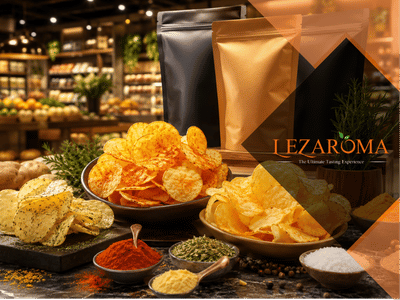
Lezaroma's chip flavors and potato seasonings serve as a tool to enhance product value and boost market presence
In the modern food industry, potato chip flavors have become more than just a powder added to the chips after frying. Today, they represent the product's language and identity, and one of the most important factors in standing out in a crowded market of brands. When a bag of chips enters a store, it competes with dozens of similar products in terms of shape, size, and price. Therefore, taste is the factor that gives the product a real chance to remain in the consumer's memory. An attractive package might entice a customer to try the product once, but it is the chips' seasonings, spices, and potato flavors that determine whether they will buy it again or switch to another brand.
The value of a food product depends on the complete experience it offers, and this experience begins before the actual taste. Upon opening the package, the first aroma is present, and this aroma is responsible for quickly forming the consumer's expectation. If the package advertises a cheese flavor, for example, the aroma must have a clear and convincing cheesy character. If the product has a spicy flavor, the aroma should hint at peppers and spices without being unpleasant or overpowering. After that comes the initial taste, then the texture, and finally the sensation that lingers after chewing. For a product to be successful, all these stages must work together in a balanced way.
This isn't achieved by randomly mixing spices; it requires a scientific understanding of how ingredients interact with the base, oils, heat, and humidity. Lezaroma approaches flavor development from this perspective, studying the nature of the product, the production line, and the target market before arriving at the final blend. Lezaroma understands that a flavor suitable for thin chips may not be appropriate for a thick or wavy product, and a blend that works well for a fried product may need adjustment when used on a baked snack or corn- or grain-based crisps.
The surface area of the product affects the amount of chip powder required and how the flavor is expressed. Thin chips have a large surface area relative to their weight, so they may require a lighter, more precise application. Thick or wavy chips, on the other hand, may need a powder that can penetrate all areas without settling into the grooves. Hollow, spherical, or elongated products also differ in how they retain seasonings, making the development of potato flavors as much a process as it is related to the product's shape as to the flavor components themselves.
Oil is essential for fixing potato chip seasonings, as it acts as a medium that helps the powder adhere to the surface. However, the amount, type, and temperature of oil affect flavor performance. If the oil content is too low, the powder may sink to the bottom of the container, while too high, the product may become heavy or greasy, and the oil may overpower some sensory details. Furthermore, some aromatic compounds are more pronounced in the presence of fat, while others may be diminished. Therefore, the flavor must be carefully adjusted to suit the product's actual composition.
Professional potato chip seasonings build flavor on multiple levels. There's the initial impression upon eating the chip, the underlying flavor that develops during chewing, and finally, the lingering aftertaste. A good product doesn't rely solely on a strong initial burst of flavor but maintains its appeal throughout continued consumption. The flavor might be very strong the first bite, but it becomes tiresome after a few bites, reducing consumer enjoyment and impacting the likelihood of repurchase. A balanced blend, on the other hand, provides sufficient definition without causing rapid saturation.
Salt plays an important role in defining flavor, but it shouldn't be the sole dominant element. Some products attempt to compensate for a weak blend by increasing salt, but this can result in a sharp, direct taste lacking depth. A fuller flavor can be achieved by balancing saltiness, acidity, aroma, heat, and ingredients that create a creamy or smoky sensation. Therefore, successful chip seasoning isn't measured solely by salt content, but by its ability to deliver a well-rounded experience.
Acidity is used to add vibrancy and freshness to flavor, especially in lemon, vinegar, pepper, and sauce blends. However, acidity needs careful control, as too much can cause an uncomfortable burning sensation, while too little can lead to a lack of dynamism. A small amount of acidic elements can enhance the spice and improve its definition without the consumer experiencing an overly sour taste.
Spicy flavors require a specific understanding of the target audience. There's a difference between a heat that appears quickly and disappears, a heat that starts mildly and then builds up, and a heat that lingers after the initial taste. Markets vary in their preferences for these styles, and age groups differ in their tolerance for them. Lezaroma helps manufacturers control and distribute the intensity within the flavor so that it becomes part of the flavor identity, not a separate element that overpowers everything else.
With cheese flavors, the challenge is different. A full and distinct flavor must be achieved without the product becoming heavy or overly salty. Cheese flavors can range from creamy and salty to smoky and spicy, and can be combined with herbs, peppers, onions, or tomatoes. This diversity allows manufacturers to release multiple cheese products without the flavors sounding repetitive or similar.
Potato chip powder is a crucial technical element in the production line because its physical properties affect operational efficiency. The powder must be free-flowing, not prone to clumping, and maintain its consistency during storage and transportation. If the heavy and light components are separated, the flavor may vary from batch to batch, or even within the same batch. Differences in particle size can also lead to uneven powder distribution; therefore, industrial blends are designed with a balance between flavor and mechanical performance in mind.
Lizaroma helps manufacturers select the appropriate concentration based on the nature of the product. A highly concentrated flavor can produce a strong result in a small amount, but it requires a precise dosing system. To avoid noticeable differences between batches, it's important to ensure consistency. Less concentrated mixes may be easier to apply but increase consumption. Therefore, efficiency is evaluated based on the application cost per unit of product, not just the price of the powder.
The timing of adding potato seasoning affects the final taste. If the seasoning is added while the product is very hot, some aromatic components may evaporate or change their nature. If added after the product has cooled considerably, the powder's adhesion may decrease. Therefore, the optimal application point within the production line must be determined, adjusting the seasoning machine speed, mixing time, and the amount of powder added.
Taste consistency from batch to batch is one of the most important indicators consumers use to evaluate a brand. When a customer finds the flavor varies each time, they lose confidence in the product, even if some batches are of good quality. Lezaroma focuses on developing chip and potato seasoning flavors that can be applied consistently, maintaining the same balance across different production batches.
This consistency is not only related to the mix but also to factory conditions. Changes in oil type, frying temperature, potato moisture content, or production line speed can all affect flavor. Inconsistent dosages also cause noticeable variations between products. Therefore, the production team must collaborate with the flavor supplier to understand and stabilize all influencing factors.
Custom chip flavors enhance brand value because they offer a taste that is difficult to directly replicate. A familiar flavor can be developed and then refined to become more distinctive. For example, a barbecue flavor can be developed with a subtle smoky note and limited sweetness, a pepper and lemon blend can be created with a balanced pH, or a cheese flavor can be introduced with a hint of herbs. These details make the product familiar enough to be accepted and different enough to be remembered.
Lezaroma offers the option of developing multiple variations of a single flavor, allowing the factory to test different levels of strength, saltiness, and heat before finalizing the formula. Sensory tests can be conducted with an internal team or a sample of consumers to determine the blend closest to actual market preferences. This step helps reduce the likelihood of launching a product that does not meet the desired standards.
Sensory testing plays a crucial role in evaluating potato chip seasonings, as it reveals aspects not apparent in theoretical analysis alone. A flavor might be well-balanced in composition but not appeal to the target consumer. The aroma might be pleasant, but the taste fades quickly, or the initial impression might be excellent, only for the product to become salty after consuming a larger quantity. Through repeated testing, the blend can be refined to achieve a more palatable and consistent flavor profile.
Potato flavors can also be used as a tool for product expansion. A manufacturer can maintain the same potato or corn base and then introduce several varieties by changing the seasonings. This reduces the need for a complete overhaul of the production line and allows for faster product launches. A range could be designed that includes a classic flavor, a spicy flavor, a cheesy flavor, and a flavor inspired by a global dish.
Seasonal or limited-edition flavors help create new market engagement. A manufacturer might release a special flavor for a limited time, monitor consumer reactions, and then decide whether to make it a permanent product if it performs well. This strategy gives the brand a more innovative image and helps it gather practical information about consumer trends.
The seasoning in potato chips also affects the perceived value of the product. When the aroma is clear, the powder is evenly distributed, and the taste is consistent, the consumer feels the product is well-made. This allows the brand to build a better image and can help it compete in a higher price range. Conversely, uneven seasoning or excessive amounts of powder at the bottom of the package give the impression of low quality.
Flavor quality is inextricably linked to packaging quality. Packaging protects the product from air, moisture, and light, all of which can affect the oils and aromatic components. If the product is exposed to moisture, it may lose its crispness, and if the oil oxidizes, undesirable odors may emerge, masking the potato seasoning. Therefore, appropriate packaging materials must be chosen, and the sealing, storage, and transportation processes must be carefully managed.
Factories also need to test the product throughout its shelf life, as the taste on the day of production may differ several months later. The intensity of the aroma, color consistency, crispness level, and the appearance of any unusual flavors should be monitored. Through these tests, the mix, packaging, or storage conditions can be adjusted before the product is released to the public.
Lezaroma offers solutions suitable for various applications within the snack industry, including chip flavors, chip seasonings, potato flavors, corn mixes, and crackers. Flavors can be adapted to fried, baked, or grain-based products, as each food base requires different processing to achieve the desired flavor.
The desired flavor varies depending on the target audience. Products aimed at children typically require a milder, simpler taste, while products targeting young adults can rely on a more intense and bolder flavor. Premium products may require more complex flavors with multiple layers. This flexibility allows manufacturers to build product lines that appeal to multiple segments instead of focusing on a single category.
Flavors also facilitate export expansion, as the mix can be tailored to the tastes of each market. One market might prefer a distinctly salty flavor, while another prefers acidic or spicy flavors. A smoky flavor might be desirable in one region and unfamiliar in another. By developing a version suitable for each market, the chances of product acceptance and wider distribution increase.
Lezaroma's value extends beyond simply providing ready-made powder; it encompasses understanding the project from concept to implementation. Collaboration can begin with defining the flavor type and target audience, followed by developing and testing samples, and then adjusting the dosages.
#Lezaroma #ليزاروما #نكهات_الشيبس #نكهات_الشيبسي #توابل_الشيبس #بهارات_الشيبس #بودرة_الشيبس #خلطات_الشيبس #نكهات_البطاطس #توابل_البطاطس #بهارات_البطاطس #بودرة_البطاطس #نكهات_المقرمشات #توابل_المقرمشات #بهارات_المقرمشات #نكهات_السناك #بهارات_السناك #توابل_السناك #نكهات_الذرة #بودرة_النكهات #نكهات_غذائية #نكهات_صناعية #نكهات_تصنيعية #نكهات_جاهزة #نكهات_مخصصة #نكهات_ثابتة #نكهات_عالية_التركيز #نكهات_عالية_الجودة #نكهات_للمصانع #نكهات_لخطوط_الإنتاج #مصانع_الشيبس #مصانع_البطاطس #مصانع_المقرمشات #صناعة_الشيبس #صناعة_السناك #صناعة_الأغذية #FoodFlavors #ChipsFlavors #PotatoFlavors #ChipsSeasoning #PotatoSeasoning #SnackFlavors #SnackSeasoning #IndustrialFlavors #FoodSeasoning #FlavorSolutions #FlavorDevelopment #LezaromaFlavors

Popular Articles